Key Takeaways
- Virginia’s right-of-way extends well beyond the pavement edge, often 25 to 50 feet from the centerline, and trees inside that zone fall under VDOT jurisdiction, not the landowner’s.
- Cutting or removing trees inside a VDOT right-of-way without a Land Use Permit is illegal and can result in fines and mandatory restoration at the landowner’s expense.
- Property lines and right-of-way boundaries are not the same. Many rural landowners in Culpeper, Fauquier, and Rappahannock counties have trees that legally sit inside state-controlled right-of-way.
- Emergencies involving storm-downed trees still require VDOT coordination beyond immediate road clearing.
- Working with an ISA-certified arborist helps document tree conditions, support permit applications, and keep work on the right side of Virginia law.
Ask anyone who has farmed or owned rural land in Rappahannock or Fauquier County, and they will likely tell you the same thing: trees near the road are their trees, their problem, and their responsibility to deal with. That assumption feels obvious. In many cases, it is also wrong.
Virginia’s right-of-way (ROW) rules catch rural property owners off guard every year. Someone takes down a dead oak that has been hanging over a secondary road for a decade. A farmer clears a fence line that has grown into the travel lane. The work seems overdue and reasonable. Then a notice arrives from The Virginia Department of Transportation (VDOT) and what seemed like responsible land management becomes an expensive compliance problem.
Here is what you actually need to know before cutting anything near a rural road in Northern Virginia.
What Is a Right-of-Way and Why Does It Affect Your Trees?
A right-of-way (ROW) is the strip of land a government entity controls for transportation purposes. For Virginia’s state-maintained roads, that entity is VDOT. The right-of-way includes the pavement, shoulders, drainage ditches, and a buffer of land extending outward on both sides measured from the centerline of the road, not the pavement edge.
On rural secondary roads throughout Culpeper, Fauquier, and Rappahannock counties, common ROW widths include 25 feet from centerline on older roads, 33 feet on many secondary routes, and 50 feet or more on primary routes. Trees growing 15 or 20 feet back from the pavement may still be inside VDOT’s jurisdiction even if they appear to sit on the landowner’s side of the fence.
The Property Line vs. Right-of-Way Confusion
This is where most disputes begin. A landowner believes a tree is theirs because it appears to be. But property deeds and older plat maps often do not clearly show where the right-of-way begins. On rural roads established generations ago throughout Rappahannock and Culpeper counties, ROW boundaries were set informally and may not translate cleanly to modern records.
Property corners may sit at an old fence line that was itself set back from the road but the actual ROW may extend further than that fence suggests. The tree between the fence and the road may legally sit inside state-controlled right-of-way regardless of how long the landowner has maintained it.
How to confirm the boundary before cutting: request a right-of-way plat from your VDOT district office, review your deed carefully for road easement language, and contact your local VDOT residency office with the specific road location. When significant trees are at stake, a licensed land surveyor is worth the investment.
What VDOT Controls and What It Doesn’t
VDOT has clear authority within the right-of-way to remove or trim hazardous vegetation, approve or deny permits for work performed by landowners or contractors, require restoration when unauthorized work occurs, and issue fines for unpermitted removal.
What VDOT does not control: trees entirely on private property behind the ROW line, and routine mowing within limits it has delegated.
In practice, VDOT does not proactively manage every rural right-of-way tree. Many trees across these counties have grown undisturbed inside the ROW for decades with no VDOT action planned. That changes the moment a landowner removes one without authorization.
The Land Use Permit: Your Legal Path Forward
If you need to remove or significantly trim a tree inside a Virginia right-of-way, a VDOT Land Use Permit is required. The process involves submitting a Land Use Application through your local VDOT residency office, describing the proposed work in detail. VDOT reviews and approves or modifies the request. Work is then completed per the permit’s specific conditions which often include traffic control requirements and restoration obligations such as reseeding disturbed areas.
For rural landowners accustomed to managing their own property without outside approval, this process can feel unnecessary. But the cost of skipping fines plus mandatory restoration on VDOT’s terms, including – replanting at species, size, and placement VDOT specifies is almost always higher than doing it right the first time.
Emergency Tree Situations on Rural Roads
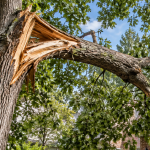
When a tree falls across a rural road in the middle of the night, someone has to respond. Virginia law and VDOT practice allow for emergency hazard clearing, but there are firm limits on what private landowners can do unilaterally. Moving debris off the road surface as an immediate safety measure is generally understood. Complete tree removal, stump work, and extensive ROW clearing without follow-up VDOT coordination is not.
The right steps: report the hazard to VDOT’s emergency line at 1-800-FOR-ROAD, keep the travel lane clear if safely possible, contact a professional tree service for hazard assessment, and coordinate with VDOT before removing large trees or stumps from the right-of-way.
Premier Tree & Landscaping provides 24/7 emergency tree service throughout Culpeper, Fauquier, Rappahannock, and surrounding counties and handles road-adjacent storm damage situations including documentation and insurance coordination regularly. Before any crew picks up a saw near a rural road, Premier Tree & Landscaping conducts a full site assessment: confirming the right-of-way boundary, documenting tree condition for permit applications or insurance purposes, reviewing site access, and identifying the correct legal path forward before any work begins. Our ISA and TCIA affiliations guide how evaluations are conducted and how work is planned. Call us at (540) 264-9008 to schedule your free on-site estimate.
Frequently Asked Questions About Right-of-Way Trees in Northern Virginia
Can I trim branches from a ROW tree that hangs over my private driveway?
Minor trimming to improve visibility at private entrances may be allowed without a full permit but confirm with your VDOT residency office before touching anything. Do not assume minor work is automatically permitted.
What happens if I remove a ROW tree without a permit?
VDOT can require full restoration at your expense, including replanting at species, size, and placement of VDOT’s choosing. Fines may also apply. In practice, restoration costs regularly exceed what permitted removal would have cost.
How long does the Land Use Permit process take?
Timelines vary by district and project complexity. Simple removal requests on rural secondary roads often move faster than projects on primary routes or those requiring traffic control plans. Starting the process early is always the right approach.
Does a fallen tree blocking the road automatically give me the right to remove it entirely?
No. Clearing the road surface as an immediate safety measure is generally understood. Full stump removal and extensive ROW work still require VDOT coordination and in most cases a permit.
Summary Checklist: Right-of-Way Trees on Rural Virginia Roads
| Situation | Risk of Violation | Recommended Action |
| Large Tree Inside ROW Needs Removal | High | Apply for a VDOT Land Use Permit before beginning any tree work. |
| Fallen Tree Blocking Road After Storm | Moderate | Clear the roadway for safety, then contact VDOT before completing removal. |
| Branches from ROW Tree Over Driveway | Low to Moderate | Contact your local VDOT residency office to confirm allowable work. |
| Unsure Whether Tree Is on Private Property or ROW | High | Request a right-of-way plat from VDOT and consult a surveyor if necessary. |
| Contractor Recommends Cutting Without Permit | High | Do not proceed. Unauthorized work may create legal and financial liability. |
Final Advice
Virginia’s rural right-of-way rules are not designed to frustrate landowners; they exist because trees in public rights-of-way affect road safety, drainage, and public infrastructure in ways that go beyond the individual property. The regulations are not a reason to avoid necessary tree work near rural roads. They are a reason to confirm the boundary, follow the permit process, and work with a professional tree service firm in Castleton, VA that understands how to navigate it. A correct assessment, a proper permit application, and a crew that knows Virginia’s ROW rules are what separate a smooth, legal removal from a costly, stressful mistake.
For a free on-site estimate on tree work near rural roads in Northern Virginia, contact Premier Tree & Landscaping at (540) 264-9008.