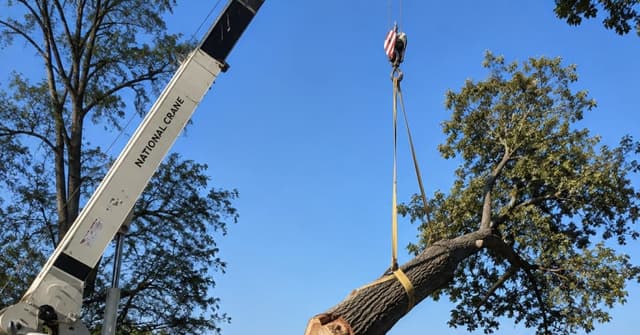
Large trees can add shade, privacy, and character to a property, but removing one is very different from removing a small or medium-sized tree. A large tree may have a heavy trunk, long branches, a wide canopy, and extensive root growth. When the tree is close to a house, driveway, fence, utility line, or other structure, there is also less room for error.
For homeowners in the Northern Neck, Premier Tree & Landscaping provides large tree removal and other tree services. We work with homeowners in Castleton, Viewtown, Woodville, Rixeyville, and nearby communities.
What Makes Large Tree Removal Different?
The size of a tree affects almost every part of the removal process.
A large tree can have:
- A trunk that is too heavy to safely cut and drop as one piece
- Large branches that extend over buildings or other property
- A wide canopy that limits access for equipment
- Heavy sections of trunk that require controlled lowering
- Roots that can affect nearby structures, driveways, or underground areas
- More potential for property damage if the tree is not removed carefully
Because of this, large trees are often removed in sections rather than simply cutting through the trunk and allowing the entire tree to fall.
When Should a Large Tree Be Removed?
Size alone does not mean a tree needs to be removed. A large, healthy tree can remain on a property for many years if it is structurally sound and has enough space.
Removal may become necessary when there are serious problems with the tree or its location.
Some common warning signs include:
Dead or Declining Trees
A dead tree no longer has the ability to support itself in the same way as a living tree. Dead branches can become brittle and may fall without much warning.
Large dead trees can be particularly concerning because their branches and trunk sections can weigh hundreds or thousands of pounds.
Significant Trunk Decay
Decay inside a large trunk can sometimes develop without being obvious from the outside. Visible cavities, large areas of missing bark, fungal growth, cracks, or soft sections of wood can be signs that the tree needs closer inspection.
Large Cracks or Split Branches
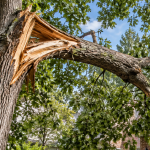
Structural cracks can weaken major limbs or the trunk itself. A large branch extending over a house, driveway, or frequently used area can create a significant concern if it has a major crack or weak attachment.
Severe Storm Damage
Wind, lightning, and severe storms can damage large trees even when they remain standing. A tree may lose major branches, develop a new lean, or suffer damage where the trunk or limbs have split.
A damaged tree should be assessed before homeowners attempt to remove broken branches themselves.
Leaning Trees
Some trees naturally grow with a lean, and a lean does not automatically mean a tree is dangerous. However, a new or worsening lean can indicate root, trunk, or structural problems.
The direction of the lean also matters. A large tree leaning toward a home, garage, driveway, or other occupied area requires more careful consideration.
How Is a Large Tree Evaluated Before Removal?
Before removing a large tree, the tree and surrounding property need to be considered together.
Important factors include:
- Tree size: The height, trunk diameter, canopy spread, and weight of major limbs all affect the removal plan.
- Tree condition: Dead wood, decay, cracks, weak branch attachments, and storm damage can change how the tree needs to be handled.
- Tree position: A tree standing in an open field is very different from a tree growing between a house and a fence.
- Surrounding structures: Buildings, vehicles, fences, landscaping, driveways, and other objects may limit where branches and trunk sections can be placed.
- Access: The available space around the tree can affect what equipment and removal methods can be used.
- Ground conditions: Slopes, soft ground, landscaping, and other site conditions can make equipment access more difficult.
These factors help determine how the tree can be safely taken apart and removed.
How Are Large Trees Removed?
Large trees are commonly removed from the top down when there is not enough room to safely fell the entire tree.
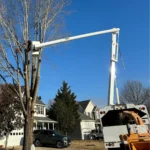
The crew may first remove smaller branches before working toward the larger limbs and trunk sections. Larger pieces can then be cut into manageable sections and lowered or moved away from the work area.
The exact process depends on the tree and property.
Sectional Removal
With sectional removal, the tree is dismantled piece by piece instead of being allowed to fall as one complete tree.
This approach can be useful when a large tree is surrounded by structures or other obstacles. Removing smaller sections gives the crew more control over where material goes.
Controlled Lowering
Large branches or sections of the trunk may need to be lowered rather than dropped directly to the ground.
This is particularly important when there is a house, fence, driveway, landscaping, or other property underneath the tree.
Removal From an Open Area
If a large tree is located in an open area with sufficient clearance, there may be more options for how it can be removed.
Even in an open area, the size, condition, lean, and surrounding terrain still need to be considered before cutting begins.
Why Large Trees Can Be Dangerous to Remove
The main concern with large tree removal is the amount of weight involved.
A large branch may look manageable from the ground but can weigh far more than expected. The same applies to sections of the trunk. Once cut, these pieces can move, swing, roll, or fall in unexpected ways.
Large trees can also contain internal decay that is difficult to see from the ground.
For this reason, homeowners should not attempt to remove large trees themselves, particularly when the tree is close to a home, utility lines, or other structures.
What Can Affect the Cost of Large Tree Removal?
There is no single price for large tree removal because every property is different.
The cost can be affected by:
- Height and trunk diameter
- Number and size of major limbs
- Tree condition
- Amount of dead or damaged wood
- Location of the tree
- Proximity to buildings and other structures
- Access for equipment
- Whether sections need to be lowered
- Amount of debris and cleanup
- Stump grinding or stump removal
- Difficult terrain or limited working space
A large tree in an open yard may require a very different removal process from a similar-sized tree growing between a house and a garage.
What Happens to the Tree After Removal?
Once the tree has been cut down, the remaining branches and trunk sections need to be processed and removed from the property.
Large limbs can be chipped or cut into smaller pieces, while sections of the trunk may need to be cut into manageable pieces for removal.
Homeowners should also consider what they want to do with the stump.
A tree can be completely removed above ground while the stump remains in the soil. Stump grinding can remove much of the remaining stump below the surface and make the area easier to use for landscaping or other purposes.
Large Tree Removal in Castleton, Viewtown, Woodville, and Rixeyville
Large tree removal requires more planning when the tree is close to a home or other property. Understanding the tree’s size, condition, location, and surroundings is an important part of determining the appropriate removal method.
Premier Tree & Landscaping provides large tree removal and tree services throughout the Northern Neck and nearby Northern Virginia communities, including Castleton, Viewtown, Woodville, and Rixeyville.
If you have a large tree that is dead, damaged, leaning, declining, or becoming a concern because of its location, a professional assessment can help you understand whether removal is necessary and what the project may involve.