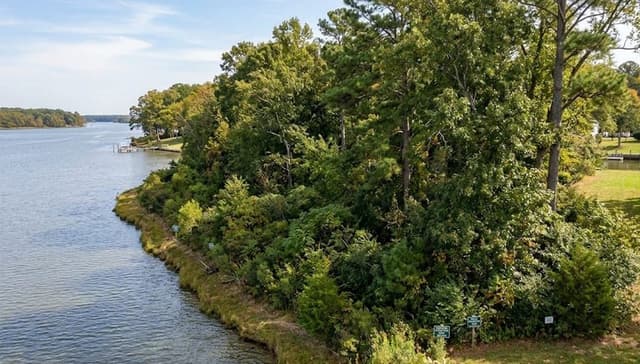
Cutting the wrong tree on a Northern Neck waterfront can trigger fines, forced replanting, and legal trouble. Most shoreline properties fall inside a 100-foot Resource Protection Area (RPA), where tree removal is tightly regulated under Virginia’s Chesapeake Bay Preservation Act.
Dead, dying, or hazardous trees are usually allowed to be removed. Healthy trees are restricted, except for limited sight lines, and those removals require replacement. Clear-cutting is prohibited, and violations can lead to restoration orders and civil penalties.
Before you cut anything, you need to know exactly what’s protected, what’s allowed without approval, and when a permit, waiver, or variance is required.
Key Takeaways
- A Resource Protection Area (RPA) is a 100-foot protected buffer along shoreline and wetlands
- All Northern Neck counties enforce Chesapeake Bay Preservation rules locally
- Dead, diseased, or hazardous trees can usually be removed with notice or approval
- Healthy trees are restricted and require replacement if removed for sight lines
- Clear-cutting and converting the buffer to lawn are not allowed
- Violations can trigger fines and mandatory 2-to-1 tree replacement
- Always confirm with your county before cutting
What Is an RPA and Why Does It Apply to Your Lot?
A Resource Protection Area is a regulated buffer of environmentally sensitive land along shorelines. Virginia created RPAs under the Chesapeake Bay Preservation Act of 1988 to protect water quality in the Bay and its tributaries.
On the Northern Neck, nearly every waterfront parcel includes an RPA. The peninsula is bounded by the Potomac River to the north, the Rappahannock River to the south, and the Chesapeake Bay to the east. The region holds over 1,100 miles of tidal shoreline across Lancaster, Northumberland, Richmond, and Westmoreland counties.
Your RPA typically includes:
- Tidal wetlands
- Tidal shorelines along the Potomac, Rappahannock, or Bay
- Nontidal wetlands connected to perennial streams
- A 100-foot vegetated buffer landward of the features above
The buffer is the critical part for homeowners. That 100 feet is where tree-clearing rules are tightest.
What the Law Actually Says About Cutting Trees
State regulation 9VAC25-830-140 sets the performance criteria that every Northern Neck county enforces locally. The key points for tree work:
- Mature trees must be preserved and pruned instead of removal as site conditions permit.
- Removal must be limited to the fewest trees feasible.
- Trees removed for sight lines or vistas must be replaced with appropriate native species.
- Clear-cutting is not permitted. You cannot convert RPA land to lawn.
- Dead, diseased, or dying trees may be removed and replaced with equally effective vegetation.
- Noxious weeds and invasive species (Johnson grass, kudzu, multiflora rose) may be removed.
- Thinning of trees may be allowed under specific local conditions.
Each Northern Neck county has its own ordinance implementing these rules, so local procedures vary slightly. Always verify with your county environmental office before cutting.
What You Can Usually Do Without a Variance
The following activities are typically allowed in the RPA, though many still require notification or an administrative review:
- Removing dead, dying, or diseased trees (health verification may be required)
- Removing trees that pose an imminent hazard to people or structures
- Pruning for tree health and safety
- Selective tree removal for reasonable sight lines to the water
- Removing invasive or noxious plants
- Replanting or restoring native vegetation
Sight-line removal comes with the strictest conditions: you must replace removed trees, use native species where possible, and keep removal to the minimum number of trees needed.
What You Cannot Do Without Approval
These activities require a variance, waiver, or water quality impact assessment:
- Clear-cutting any portion of the buffer
- Converting RPA vegetation to lawn, patio, or garden
- Removing healthy mature trees beyond limited sight-line allowances
- Land disturbance over 2,500 square feet inside the RPA
- Grading, excavation, or new construction within the buffer
- Removal of approximately 10 or more healthy trees inside the RPA (in many jurisdictions)
Proceeding without approval on any of these can trigger enforcement action under the Chesapeake Bay Preservation Ordinance.
Hazard Trees: The Safety Exception
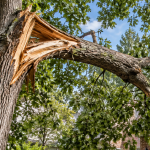
Waterfront homeowners dealing with a storm-damaged or clearly unsafe tree usually have a faster path. Hazard trees that threaten homes, docks, vehicles, or people can generally be removed, but you still need to:
- Document the hazard with photos before removal
- Contact your county environmental planner or administrator
- Get written or emailed confirmation of the removal, even if expedited
- Follow county replacement requirements, if any apply
An ISA Certified Arborist’s written hazard evaluation carries real weight in these conversations. Counties take professional assessments seriously when deciding whether removal is justified.
County-by-County Snapshot for the Northern Neck
Every county in the region adopted its own Chesapeake Bay Preservation Ordinance after the 1988 state law. Key contact points:
| County | Department to Contact | Permit Process |
|---|---|---|
| Lancaster | Lancaster County Land Use / Zoning | Submit a vegetation removal request through the appropriate zoning review process |
| Northumberland | Northumberland County Planning & Zoning | Complete compliance review for Chesapeake Bay protection vegetation regulations |
| Richmond County, VA | Richmond County Planning & Zoning | Administrative review may be required for regulated protected area vegetation activity |
| Westmoreland | Westmoreland County Environmental Planning | File a vegetation removal application for environmental review and approval |
Procedures, forms, and replacement ratios differ. Some counties accept a simple notification for dead trees. Others require a site visit before any RPA vegetation work. Call first.
What Happens If You Clear Trees Illegally
Enforcement has teeth. A non-compliant removal can result in:
- A formal violation notice under the county ordinance
- A mandatory restoration plan, often at a 2-to-1 replacement ratio (two trees planted for every one removed)
- Civil penalties per violation, per day
- Required native plantings and monitoring for multiple years
- Delays or denials on future permits for the property
- Reduced property value if the violation becomes part of the public record
A $500 weekend cleanup can easily turn into a $15,000 restoration plan. Contractors who offer to “just take it down” without permits are putting you, not themselves, at legal risk.
How to Cut Trees the Right Way on the Northern Neck
- Map your RPA first: Contact your county GIS or environmental office for a site-specific boundary review.
- Get a professional tree assessment: An ISA Certified Arborist can document which trees are truly hazardous or diseased.
- Notify or apply with your county: Even for dead trees, many counties want written notice.
- Keep removal to the minimum needed: The law requires “the fewest number of trees feasible.”
- Plan replacements in advance: Native canopy trees (white oak, bald cypress, river birch, willow oak) work best.
- Document everything: Photos before and after, arborist reports, county correspondence.
- Hire a contractor familiar with RPA rules: Not every tree service understands shoreline compliance.
Best Replacement Trees for a Northern Neck RPA
Native species filter runoff better, support wildlife, and tolerate riparian conditions. Strong choices include:
- Bald cypress
- River birch
- White oak
- Willow oak
- Red maple (native variety)
- American holly
- Black gum (tupelo)
- Sweetbay magnolia
- Eastern redbud (understory)
Your arborist or county planner can confirm the replacement list your jurisdiction accepts.
Frequently Asked Questions
What is a Resource Protection Area (RPA) in Virginia?
A 100-foot protected buffer along tidal waters, wetlands, and perennial streams. It is the most tightly regulated part of Virginia’s Chesapeake Bay Preservation Areas.
Can I cut trees on my own Northern Neck waterfront property?
Only within RPA limits. Dead, dying, diseased, and hazardous trees generally can be removed. Healthy mature trees cannot be removed except for limited sight lines, and those removals require replacement.
Do I need a permit to remove a dead tree in the RPA?
Yes, most RPA tree removal requires notification or approval, even for dead trees. Requirements vary by county, but documentation is usually expected.
What counts as a “sight line” exception?
Selective removal to open a reasonable view of the water. It is not a license to clear. Counties limit the number of trees, require native replacements, and expect documentation.
Can I make a lawn in my RPA?
No. Converting RPA vegetation to turf grass is prohibited under the state performance criteria.
What’s the penalty for cutting trees without a permit?
A violation notice, a mandatory restoration plan (often 2-to-1 replacement), civil penalties, and possible restrictions on future permits.
How close to the water does the RPA start?
A Resource Protection Area (RPA) in Virginia is a 100-foot buffer along waterways where tree removal and land disturbance are strictly regulated.
How do I find out if my property is in an RPA?
Contact your county GIS or planning office. Most Northern Neck counties will provide a site-specific determination. RPAs usually appear on county zoning maps.
Can storm-damaged trees be removed immediately?
Yes, if they pose an immediate hazard. Document the damage with photos, contact the county, and keep records of the removal.
Do I have to replace trees I remove?
In most cases, yes. Replacement ratios vary by county and activity, but 2-to-1 is common for unauthorized removals and 1-to-1 or greater for sight-line removals.
Does the RPA rule apply to shrubs and smaller vegetation?
Yes. The buffer protects the full vegetated area, not just the canopy trees. Indigenous vegetation must be preserved to the maximum extent practicable.
Can my HOA override RPA rules?
No. State and county law controls. An HOA cannot authorize removal that the county prohibits.
Is silviculture regulated the same way?
Silvicultural operations are generally exempt from the RPA regulations if they follow the Virginia Department of Forestry’s Best Management Practices for water quality. Most residential tree work does not qualify as silviculture.
Should I hire a certified arborist for RPA work?
Yes. An ISA Certified Arborist understands both tree health and local compliance, and their documentation carries weight with county reviewers.
Protect Your Property, Your View, and Your Compliance
RPA rules exist because the Chesapeake Bay watershed depends on the buffer you live next to. They also protect you from fines, lawsuits, and restoration orders you never planned for.
Before you cut anything within 100 feet of the shoreline, get a certified assessment. One wrong decision can trigger fines and mandatory restoration. A quick inspection gives you clear, compliant next steps.
Schedule a Northern Neck shoreline tree assessment with a certified arborist and get clear, compliant recommendations before the chainsaw comes out.