
Key Takeaways
- Early Detection Is Crucial: Recognizing hazard trees before a storm helps avoid significant damage to your property.
- Leaning and Cracked Trunks: These signs indicate instability and risk during strong winds.
- Deadwood and Decay: Trees with dead branches or signs of decay are prone to falling during storms.
- Exposed Roots and Compacted Soil: If roots are visible or the soil around them is compacted, your tree may be at risk.
- Fungal Growth and Cavities: These could indicate internal damage or decay, making the tree vulnerable to falling.
Trees are a vital part of any landscape, but they can also pose a serious risk when they become unstable. In particular, during storm season, trees that show signs of being “hazardous” can become even more dangerous, especially in high winds. Recognizing the warning signs of hazardous trees before the next windstorm can help prevent property damage, injury, and costly repairs.
This guide outlines the 7 key signs to look for when assessing the stability of trees around your property, so you can take early action to keep your landscape safe.
1. Leaning Trees
One of the most obvious and alarming signs of a hazardous tree is when it starts leaning in an unnatural direction. Trees naturally lean toward the sun, but if the lean is extreme or has occurred recently, it could indicate structural instability. Trees that are top-heavy or have an unbalanced canopy are at higher risk of toppling over in strong winds.
What to look for:
- A leaning angle greater than 15 degrees.
- Any sudden leaning that wasn’t previously visible
- Leaning trees close to structures, driveways, or walkways are especially dangerous
Action:
If you notice any leaning, especially near structures or walkways, it’s essential to call a professional arborist like Premier Tree & Landscaping for an evaluation. Sometimes, leaning trees may require removal or support to prevent them from falling.
2. Cracked Trunk or Branches
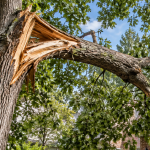
A cracked or split trunk is one of the most serious warning signs that a tree is compromised. A tree with a large crack in its trunk or major branch risks breaking apart under pressure, such as from strong winds. Cracks are often caused by diseases, pests, or simply old age, which weaken the tree’s structure.
What to look for:
- Visible cracks or splits in the trunk or branches.
- Large cavities or holes that compromise the integrity of the tree.
Action:
If you see cracks in the trunk or branches, it’s essential to get the tree inspected by an arborist immediately. Cracks can worsen quickly, and if the tree is near structures or walkways, it may need to be removed.
3. Deadwood and Decay
Dead or decaying wood is one of the clearest indicators of a hazard tree. Trees with dead branches or decaying trunks are less structurally sound, making them more susceptible to damage during windstorms. Often, these trees will lose limbs without warning, which could cause injury or damage to your property.
What to look for:
- Dead branches or limbs
- Signs of internal decay, such as soft spots or a mushy trunk
- Discoloration or fungal growth on the bark
Action:
Deadwood should be removed promptly to minimize risks. If the decay is widespread, the tree may need to be removed entirely. Regular pruning and inspections by a certified arborist can help maintain tree health and prevent dangerous deadwood from accumulating.
4. Exposed or Damaged Roots
Exposed roots are another red flag. Roots that are visible, cracked, or damaged can weaken the tree’s stability, especially during heavy winds or storms. Sometimes, trees may have root systems that become shallow or destabilized due to soil erosion, flooding, or construction activity.
What to look for:
- Roots that are visibly exposed above the soil.
- Cracked or damaged roots that compromise the tree’s ability to absorb nutrients and water.
- Soil erosion or damage around the base of the tree.
Action:
If you notice exposed roots or damage to the root system, it’s important to consult with a professional arborist. In some cases, the tree may be able to be stabilized, but in severe cases, root damage may require tree removal to prevent future accidents.
5. Fungal Growth and Mushrooms on the Trunk
Fungal growth, including mushrooms or conks, is often a sign of rot or decay inside the tree. Fungus thrives in damp, decaying wood and can cause further deterioration of the tree’s structure, making it prone to falling during storms.
What to look for:
- Mushrooms or fungal growth on the base or trunk
- A soft or spongy feel to the wood under the bark
- Black streaks or resin leaking from the tree’s trunk
Action:
If you see fungal growth, it’s crucial to have the tree professionally assessed for internal decay. An arborist will inspect the tree’s structure and may recommend removing the tree if the decay is too advanced to repair.
6. Cavities or Hollow Spots
Hollow spots in the trunk or large cavities indicate that a tree is compromised. These cavities are often caused by disease, pests, or old age, and they can significantly weaken the tree’s structural integrity, making it more likely to collapse in high winds.
What to look for:
- Large holes or cavities in the trunk or branches
- Noticeable hollow sounds when tapping on the trunk
- Bark falling off around the cavity
Action:
Hollow trees are at a much higher risk of failure during windstorms. If you find a cavity, it’s essential to consult with a professional arborist to determine whether the tree is salvageable or needs to be removed.
7. Significant Leaf Loss or Canopy Dieback
Healthy trees typically have a full canopy, with leaves or needles distributed evenly across branches. Significant leaf loss, especially if it occurs in large sections of the tree, could be a sign of stress, disease, or pests that weaken the tree. When a tree’s canopy starts dying back, it may struggle to maintain its structure and stability, making it a hazard during a storm.
What to look for:
- Large areas of dead or withered leaves.
- Unseasonal leaf loss or yellowing.
- A significant drop in overall canopy size.
Action:
If your tree’s canopy is thinning or dying back, it’s a good idea to have it assessed by an arborist. If the tree is diseased or severely stressed, removal may be the safest option before a storm hits.
The best way to protect your property from hazardous trees is by regularly inspecting the trees around your home and yard. It’s important to act early, especially before storm season. Identifying the warning signs of hazardous trees can help you avoid costly damage to your home, car, or other structures on your property. While some tree issues can be managed with regular pruning and care, others require professional intervention. Consulting with an arborist is critical to ensuring that your trees are healthy, structurally sound, and safe during stormy weather.If you suspect that any of the trees around your property may be hazardous, don’t wait until it’s too late. Premier Tree & Landscaping offers expert tree care services such as tree removal, emergency tree service, tree trimming, tree pruning, stump grinding, shrub trimming, shrub removal, and land clearing.
Our team of experienced arborists is ready to help you prevent storm damage and ensure the safety of your property. Whether you need emergency tree removal or just want to schedule an inspection, Premier Tree & Landscaping is your trusted partner for tree service across the Northern Neck of VA.
Frequently Asked Questions
- How do I know if a tree is hazardous?
Look for warning signs such as a leaning tree, cracks in the trunk, deadwood, exposed roots, fungal growth, hollow spots, and significant leaf loss. If any of these symptoms are present, it’s best to have the tree evaluated by a professional. - What should I do if I have a tree near my house that’s leaning?
A leaning tree near your house is a serious concern. It’s important to consult with an arborist as soon as possible to assess whether the tree can be stabilized or if it needs to be removed. - Can a tree be saved if it has a cavity or hollow trunk?
While some trees can recover from small cavities, large or deep hollows usually mean that the tree is structurally compromised. An arborist can assess the situation and recommend the best course of action. - Should I prune deadwood to prevent storm damage?
Yes, removing dead branches is essential for minimizing the risk of storm damage. Pruning can also improve tree health and reduce the likelihood of hazardous limbs breaking off during high winds. - How often should I have my trees inspected for hazards?
It’s recommended to inspect trees at least once a year, especially before storm season. However, after major storms or periods of heavy rain, it’s wise to check your trees for any new signs of damage or instability. - Can I remove a tree myself?
Tree removal is a dangerous task that requires professional expertise. It’s best to hire a certified arborist to remove hazardous trees safely, especially those near structures. - What can I do to prevent storm damage to my trees?
Regular pruning, root care, and removing deadwood are crucial steps. Additionally, if you have a tree showing hazard signs, it’s best to have it evaluated by a professional arborist before a storm hits. - How can I improve the health of my trees?
To improve tree health, ensure they are watered properly, avoid over-fertilizing, and regularly inspect for pests or diseases. You can also apply mulch to help retain moisture and protect roots. - Are there any trees that are more resistant to storm damage?
Certain tree species, such as hardwoods like oaks and maples, tend to be more resistant to storm damage. However, all trees need proper care and maintenance to reduce the risk of falling during a storm.
Final Advice
Identifying hazard trees before the next windstorm is crucial to protecting your property and preventing costly damage. The key warning signs include leaning trees, cracks in trunks or branches, deadwood, exposed roots, fungal growth, and significant canopy dieback. Trees with any of these symptoms are at higher risk of falling or losing limbs during strong winds. Regular inspections by a certified arborist can help spot these hazards early, allowing for timely intervention like pruning, support, or removal. By staying proactive, you can minimize storm damage and ensure your trees remain healthy and safe throughout the seasons. If you’re unsure about the condition of a tree, always consult a professional to assess its stability before the storm hits.
Reviewed by a Certified Arborist
This article has been reviewed by a certified arborist to ensure all information regarding tree care and storm safety is accurate and up to industry standards.