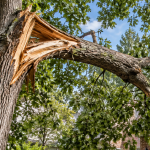

Waterfront trees on the Potomac take full wind impact. No buffer. No protection.
Wind-thinning reduces that risk. It opens the canopy so wind passes through instead of pushing the tree over.
University of Florida research shows the impact clearly. Thinned trees had a 73% survival rate in hurricanes. Unpruned trees dropped to 47%.
For waterfront properties, that difference decides whether your trees stay standing or become storm debris.
Key Takeaways
- Wind-thinning removes select interior branches so wind flows through the canopy instead of pushing it over.
- Research shows that thinned and reduced crowns significantly reduce trunk movement in hurricane-force winds.
- Waterfront properties on the Potomac face unobstructed wind fetch, making thinning more critical than for inland lots.
- Topping is not thinning. Topping destroys trees; thinning protects them.
- The best window for wind-thinning is late winter to early spring, well before the June 1 hurricane season.
- Pruned trees had 73% hurricane survival versus 47% for unpruned trees in UF post-storm studies.
What “Wind-Thinning” Actually Is
Wind-thinning, also called crown thinning, is the selective removal of small interior branches and secondary limbs throughout the canopy. The goal is to reduce the “sail effect” without stripping the tree or cutting major scaffold branches.
Done correctly, it:
- Opens small windows in the canopy so wind passes through
- Reduces the drag force on the trunk and root system
- Maintains the tree’s natural shape and leaf area for photosynthesis
- Preserves the view corridor to the water
Done incorrectly, it becomes “lion-tailing,” which strips all interior growth and pushes weight to the branch tips. Lion-tailed trees fail more in storms, not less. This is why the work belongs with a certified arborist, not a general landscaper.
Why the Potomac Shoreline Needs This More Than Inland Yards
Waterfront trees on the Potomac and its tributaries sit at the front edge of the weather. Three factors make them uniquely vulnerable:
1. Unobstructed Wind Fetch
Inland trees are buffered by neighboring buildings and forested lots. Waterfront canopies take the full force of winds coming off open water, which accelerate across long stretches of river without friction.
2. Saturated Riverbank Soils
The region’s river clay holds water. After tropical rainfall, root plates loosen in soaked ground, and even moderate wind can uproot mature trees. Hurricane Isabel in 2003 downed thousands of trees across northern Virginia and the DC metro, with 1,600 coming down in the District alone, and entire waterfront parks were reshaped by the damage.
3. Storm Surge and Tidal Flooding
The tidal Potomac pushes saltwater and debris inland during hurricanes. Trees near the shoreline absorb repeated salt stress that weakens them long before the next storm arrives. The National Weather Service hurricane history for the region documents surge events reaching 6 to 8 feet above normal along the Potomac during major storms.
How Wind-Thinning Protects Your Waterfront View
Most owners think of view protection as removing trees. For mature hardwoods you want to keep, the smarter move is to thin them.
- Preserved view corridors: Selective thinning opens sightlines through the canopy to the water without clear-cutting.
- Healthier trees that stay upright: A tree that survives the storm keeps shading your deck, framing your view, and adding property value.
- Lower emergency cleanup costs: Proactive thinning runs a fraction of emergency removal after a failure, and it avoids the landscape hole a downed tree leaves behind.
- Fewer insurance headaches. Documented, professional pruning on a regular schedule supports your position if a tree ever does fall and a claim goes sideways.
What Wind-Thinning Looks Like on a Mature Tree
A proper wind-thinning pass removes:
- Small-diameter interior branches (generally under 2 inches) throughout the crown
- Crossing, rubbing, and duplicate branches
- Dead, broken, or diseased wood
- Weak co-dominant stems with tight V-shaped unions
- Overextended limb tips on heavy scaffolds (light reduction cuts only)
It does not remove:
- Large scaffold branches (the main structural limbs)
- More than 20 to 25% of the live canopy in a single pass
- The lower inner branches, which anchor weight and taper
- The central leader or the tree’s natural form
University of Florida research confirmed that thinning and reduction cuts significantly reduced trunk movement in hurricane-force wind tests, while crown raising (lifting the lower branches) did not. The implication for waterfront owners: resist the urge to “limb up” your trees for a cleaner view. Thin through the crown instead.
Species That Respond Best to Wind-Thinning on the Potomac
| Species | Storm Vulnerability | Thinning Benefit |
|---|---|---|
| Southern red oak | Medium to High | Strategic thinning can reduce limb failure risk and improve wind movement through the canopy |
| White oak | Medium | Benefits from structural maintenance that helps preserve long-term stability and canopy balance |
| Tulip poplar | High | Canopy weight management is valuable due to brittle wood and elevated storm breakage risk |
| Sycamore | High | Thinning may reduce wind resistance in large broad canopies |
| American beech | Medium | Selective canopy management may help reduce loading stress where structural concerns exist |
| Sweetgum | Lower | Often requires less aggressive intervention, with maintenance based on structure and site conditions |
| Bradford pear | Very High | Maintenance may provide temporary risk reduction, though structural weakness often makes replacement a longer-term consideration |
| Eastern white pine | High | Structural pruning may help reduce loading on vulnerable leaders and upper canopy sections |
When to Schedule Wind-Thinning
- Best window: Late winter through early spring (February through early April), before leaf-out.
- Acceptable: Mid-summer after the spring growth flush has hardened.
- Avoid: Right before leaf drop in fall, and never during active storm warnings.
The Atlantic hurricane season runs from June 1 through November 30. Booking your pruning before Memorial Day gives the tree time to seal cuts and gives you schedule flexibility before every arborist in the region gets backed up.
What to Ask Before Hiring an Arborist
Not every crew that owns a chainsaw knows how to thin a canopy correctly. Before you sign a contract, confirm:
- ISA certification (International Society of Arboriculture)
- Current liability and workers’ comp insurance
- Written scope that specifies “crown thinning” or “structural pruning,” not “topping.”
- Percentage of live canopy to be removed (should be 25% or less)
- ANSI A300 pruning standard compliance
- References from other waterfront properties if possible
If a bid comes in suspiciously low and mentions “rounding off” or “hat-racking” the tree, walk away. That’s topping in disguise.
Common Wind-Thinning Mistakes to Avoid
- Topping the tree. Indiscriminate cutting of the upper canopy. It creates weak regrowth and accelerates decay.
- Lion-tailing. Stripping all interior growth and leaving tufts at branch tips. Dramatically increases breakage.
- Over-thinning. Removing more than 25% of live canopy stresses the tree and exposes interior wood to sunscald.
- Raising without thinning. Removing only lower branches shifts the weight upward and increases wind catch.
- Timing it wrong. Pruning during drought or heat stress compounds the damage.
- DIY on mature trees. Climbing work on large waterfront hardwoods is professional-only territory.
Frequently Asked Questions
What’s the difference between wind-thinning and topping?
Wind-thinning removes small interior branches throughout the canopy. Topping removes entire upper sections of the tree, destroying its structure and triggering weak regrowth. Topping is never an acceptable practice.
How much of a tree can safely be thinned?
Most ANSI standards cap live canopy removal at 25% in a single pruning. For mature trees, 10 to 20% is more typical and safer.
Will wind-thinning ruin my waterfront view?
No. Done properly, it often improves the view by opening sightlines through the canopy without removing the tree itself.
How often should I wind-thin waterfront trees?
Every 3 to 5 years for mature trees in good condition. More often for fast-growing species like tulip poplar and sycamore.
Can I do wind-thinning myself?
Small ornamental trees, maybe. Mature hardwoods, no. The combination of height, waterfront wind, and proximity to your house makes DIY pruning genuinely dangerous.
Does homeowners’ insurance cover tree damage on waterfront properties?
Most policies cover damage when a tree falls on insured structures. Coverage often drops for trees that were visibly hazardous and ignored. Documented professional pruning protects your claim position.
What’s the best time of year for wind-thinning on the Potomac?
Late winter to early spring, before leaf-out. This gives the tree time to seal pruning cuts before hurricane season starts on June 1.
Are some trees too dangerous to save, even with thinning?
Yes. Bradford pears past 15 years, heavily leaning trees, trees with significant trunk cavities, and emerald ash borer-infested ash trees are usually better removed than pruned.
Will wind-thinning hurt my tree?
Properly done thinning actually improves tree health by removing dead wood, improving air circulation, and reducing mechanical stress. Improperly done thinning can harm or kill the tree.
How long before hurricane season should I schedule pruning?
At least 6 to 8 weeks. This gives the tree time to seal cuts and allows scheduling flexibility before peak demand.
Do I need a permit to prune trees in Virginia or Maryland waterfront areas?
It depends on local ordinances, Chesapeake Bay Preservation Area regulations, and whether the tree is protected. Your arborist should know the local rules or help you confirm them before starting.
Can wind-thinning lower my property insurance premiums?
Some insurers offer credits for documented hazard mitigation, including professional tree management. It’s worth asking your carrier directly.
Protect Your View Before the Next Storm
Atlantic hurricane season starts June 1. The trees on your waterfront won’t tell you they’re at risk until it’s too late.
Wind-thinning is one of the few investments in waterfront property care that protects your view, your home, and your tree all at once. The window to do it right closes every year in early spring.
Schedule a waterfront canopy assessment with a certified arborist and get your trees ready before the first named storm forms.