
Key Takeaways
- Ecological Harmony: Native trees are pre-adapted to Northern Virginia’s specific climate cycles and heavy clay soils.
- Aesthetic Impact: Species like the Dogwood and Redbud offer multi-seasonal visual interest that non-native species can’t match.
- Resilience: Indigenous varieties are structurally more capable of withstanding local storm patterns and pests.
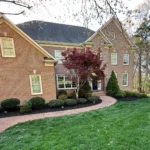
For homeowners across Culpeper, Fauquier, and Prince William counties, landscaping is an investment in both lifestyle and property value. While it can be tempting to choose trendy, exotic species from a big-box nursery, true landscape “leveling up” comes from embracing the species that have thrived in the Virginia Piedmont for centuries.
Native trees are the ultimate “hack” for a thriving yard. Because they co-evolved with local wildlife and weather patterns, they require less supplemental watering once established and offer a level of structural integrity that many fast-growing invasive species lack.
Here are five indigenous powerhouses that can redefine your outdoor space.
1. The White Oak (Quercus alba): The Heritage Anchor
The White Oak is more than just a tree; it’s a multi-generational legacy. Often reaching heights and spreads of 80 feet or more, it serves as the ultimate “anchor” for a large residential property.
- Why it works: Its massive horizontal branches provide deep shade that can significantly reduce ground temperatures during a humid August in Virginia.
- Visual Appeal: The bark is a beautiful light ash-gray, and the leaves transition into a sophisticated deep red or brownish-purple in the fall.
- Pro Tip: Because White Oaks grow slowly and live long, they are among the most valuable assets on a residential lot.
2. Eastern Redbud (Cercis canadensis): The Spring Showstopper
If you want your yard to be the envy of the neighborhood in April, the Eastern Redbud is essential. It is famous for its “cauliflory” – a botanical trait where flowers grow directly on the trunk and branches.
- Why it works: It stays relatively small (20–30 feet), making it an excellent choice for framing a front entryway or adding color to a tight backyard space.
- Visual Appeal: The heart-shaped leaves are vibrant green in summer and turn a striking gold in the fall.
- Ecology: It is a vital early-season nectar source for local honeybees and pollinators.
3. Flowering Dogwood (Cormus florida): The Understory Icon
As the Virginia State Tree, the Dogwood is a staple of our local identity. It thrives as an “understory” tree, meaning it loves the dappled sunlight found beneath larger oaks and maples.
- Why it works: It offers four distinct phases of beauty: white spring bracts, summer berries, scarlet fall foliage, and winter bark that resembles alligator skin.
- Placement: It is perfect for adding vertical interest to garden beds or softening the edges of a wooded property line.
4. River Birch (Betula nigra): The Texture Specialist
While many birches struggle in the heat of the American South, the River Birch is a rugged Virginia native. It is particularly adept at handling the heavy, wet clay soils common in areas like Manassas and Warrenton.
- Why it works: It is one of the fastest-growing natives, providing quick privacy and shade for new homeowners.
- Visual Appeal: The bark naturally curls and peels in shades of salmon, cinnamon, and cream, providing a textured look that stands out brilliantly against a snowy winter backdrop.
5. American Sycamore (Platanus occidentalis): The Architectural Giant
The American Sycamore is the go-to choice for properties with ample space or those bordering water. It is a fast-growing giant known for its “ghostly” appearance in winter.
- Why it works: As the tree matures, the older bark peels away to reveal a smooth, white inner bark that glows in the moonlight.
- Landscape Value: It creates a dramatic, “old-world” forest feel. However, due to its aggressive roots and massive size, it should be reserved for larger estates or open park-like settings.
Planting a native tree is only the first step; ensuring it matures safely requires an expert eye. Premier Tree & Landscaping is Northern Virginia’s trusted partner for arborist-led care. From precision pruning that improves the structure of young Oaks to hazardous tree removals and 24/7 emergency storm response, the team brings over a decade of local experience to every property. Whether you are in Culpeper, Haymarket, or Gainesville, the company offers flat-rate pricing and specialized equipment like crane-assisted rigging to protect your home. Keep your landscape leveled up and your family safe by calling (540) 264-9008 for a free evaluation today.
Frequently Asked Questions
Do native trees help with property drainage?
Yes, especially the River Birch and Sycamore. Their vigorous root systems are excellent at absorbing excess groundwater, which can help mitigate minor drainage issues in your yard.
Are native trees more “storm-proof”?
While no tree is immune to a hurricane, indigenous species like the White Oak have evolved wood densities that typically handle Virginia’s wind and ice better than brittle, fast-growing “ornamentals” like the Bradford Pear.
When is the best time to prune these species?
Most native hardwoods should be pruned during their dormant season (late winter) to minimize stress. However, spring-bloomers like Redbuds are often pruned right after they finish flowering.
Can I plant Dogwood in full sun?
While they can survive in full sun if watered deeply, they generally prefer a location that receives afternoon shade to mimic their natural forest environment.
How much space does a White Oak need?
Because of its wide-spreading canopy, you should ideally give a White Oak at least 20–30 feet of clearance from your home’s foundation and power lines.
Do I need to fertilize native trees?
In most Northern Virginia residential soils, a layer of organic mulch is sufficient. However, an arborist evaluation can determine if “deep root fertilization” is needed for trees showing signs of stress.
Is stump grinding necessary after a removal?
It is highly recommended. Leaving a stump can attract pests like termites and prevent you from replanting a new native tree in that same prime location.
Does Premier Tree & Landscaping offer discounts?
Yes! The company proudly offers dedicated discounts for seniors, active-duty military, veterans, and first responders to make professional tree care more accessible.
Conclusion
Transforming your Northern Virginia landscape into a high-end, resilient environment starts with the right species. By selecting indigenous trees like the White Oak or River Birch, you are working with nature rather than against it.
With the right selection and professional maintenance from Premier Tree & Landscaping, your trees will not only level up your property’s beauty today but will continue to grow in value and stature for decades to come.
Reviewed by a Certified Arborist
This safety analysis has been reviewed by an ISA Certified Arborist to ensure all information regarding soil mechanics and tree failure meets the standards of the International Society of Arboriculture.
Sources & Credible References:
- Virginia Department of Forestry – Native Tree Database
- Virginia Cooperative Extension – Selection of Landscape Trees
- USDA Forest Service – Silvics of North America: Quercus alba
- Northern Virginia Regional Commission – Native Plant Guide
- Plant NOVA Natives – Recommended Trees for Northern Virginia
- International Society of Arboriculture (ISA) – Best Management Practices
- Loudoun Wildlife Conservancy – Native Trees for Wildlife
- National Wildlife Federation – Keystone Plants for the Mid-Atlantic